Abstract: Against the back of sustained growth in global trade, China has successfully transitioned from an import-export developing country to a major export powerhouse, with its products gaining increasing market share worldwide. This development has resulted in significant trade surpluses between China and certain nations. To safeguard their leadership in the international trade system, some developed countries have imposed intellectual property trade barriers against China. This paper highlights the critical role of intellectual property in global trade, analyzes common types of IP-related trade barriers, and proposes practical countermeasures. The research aims to provide actionable guidance for enterprises to enhance their international competitiveness, ultimately strengthening both domestic and global market positions.
Key words: international trade; intellectual property trade; trade barriers; coping strategies
Alongside the global economic boom, international trade has experienced accelerated growth. In the knowledge economy era, intangible assets patents and trademarks have become increasingly significant in global trade. Countries with advanced economies and cutting-edge technologies see these transactions account for a larger share of their exports, while nations lagging in both economic development and technological progress face a heavier reliance on such imports [1]. Intellectual property, with its low-risk profile and potential to generate substantial returns, has emerged as a crucial competitive tool, often regarded as the strategic high ground in international rivalry. Today, nations worldwide are elevating intellectual property to a national strategic priority, striving to enhance competitiveness through high-value product innovation and secure dominant positions in global trade.
I. Importance of intellectual property in international trade
International trade is primarily categorized two types based on the physical form of goods: tangible trade and intangible trade. Traditional trade practices predominantly focused on tangible goods, such as clothing and machinery, which possess physical forms. Intangible trade, on the other hand, involves non-physical assets patent rights, cross-border financial services, and insurance-related technologies and services [2]. Modern international trade does not strictly distinguish between tangible and intangible trade, as these categories often overlap. For instance, transactions involving physical goods frequently include accompanying elements patent licensing and trademark rights.
Initially, intellectual property and international trade were two distinct business domains with no apparent connection. However, as the knowledge economy continues to develop and global awareness of intellectual property protection grows, their interdependence has become increasingly evident. Particularly through the signing of intellectual property agreements, these agreements have formally incorporated intellectual property as a crucial element within international trade management frameworks.
Intellectual property rights (IPR) primarily correspond to corporate internal resources and constitute a crucial component of international trade. As the term suggests, IPR trade involves transactions of intellectual property as commodities in global commerce. Accompanying the rapid development of economic globalization, the scale of IPR trade in international trade has shown a steady annual growth trend. In recent years, with the internationalization of IPR legal protections and accelerated development of intellectual property represented by patents and trademarks, its status in international trade has been steadily rising. On one hand, the rapid growth of IPR trade highlights the increasingly prominent trend of knowledge-based development in modern international trade. On the other hand, this reality demonstrates that in the context of deepening technological revolutions, IPR trade has evolved a key strategic tool for nations to compete in global economic competition.
II. Trade barriers in intellectual property in international trade
(1) Technical standard barriers
Technical standard barriers primarily refer to regulations established and enforced by host countries in intellectual property trade to enhance product technological competitiveness or restrict imports. Classified as barriers based on the formulation of stringent technical standards, they represent a prominent and frequently encountered manifestation of intellectual property trade barriers. These barriers integrate intellectual property rights with technical standards, demonstrating significant defensive and destructive effects. In the context of trade protectionism advancement across nations, such barriers constitute the most crucial and sophisticated form of implementation [3].
(2) Barriers of trademark squatting
Trademark squatting refers to the practice of obtaining benefits through improper means that do not rightfully belong to others. In simpler terms, it involves preemptively registering trademarks or related rights that others have already established in a specific field, thereby gaining advantages that do not legally belong to them. In recent years, the incidence of trademark squatting has remained consistently high. From the perspective of international market development, the growing recognition of Chinese trademark brands has made trademark squatting a common intellectual property trade barrier. Some foreign companies use this tactic to prevent Chinese products from entering their domestic markets or to slow their market penetration, while also suppressing Chinese goods.
(3) Patent knowledge barrier
As previously discussed, technical standard barriers constitute a prevalent form of intellectual property trade barrier encountered by Chinese enterprises in international trade, with patent-based knowledge barriers being the second most common type after the former. Within the framework of intellectual property trade barriers, patent-based knowledge barriers specifically refer to scenarios a country or enterprise employs patent protection systems to create application traps for competitors. By initiating legal proceedings against product manufacturers under the pretext of patent infringement, these entities effectively reduce market competition while reaping substantial patent licensing fees. The distinctive characteristic of such barriers lies in their exclusivity – unauthorized use under any pretext would constitute patent infringement.
(IV) The "337" barrier in the United States
Section 337, the abbreviated term for Section 337 of the U.S. Tariff Act of 1930, is a pivotal provision in the Act now codified as Section 1337 of Title 19 of the U.S. Code. Primarily designed to curb unfair trade practices, it specifically targets intellectual property violations including patent infringements, trademark breaches, copyright violations, industrial design infringements, and integrated circuit layout designs. The U.S. Section 337 investigations aim to rigorously regulate all forms of unfair competition and trade activities, constituting administrative remedies conducted domestically. Currently, the scope of these investigations has significantly expanded beyond domestic goods to include cross-border products, evolving a global mechanism for tracing intellectual property violations. As a representative form of trade barriers in intellectual property, Section 337 has become a key tool for the U.S. to suppress domestic competitors, ultimately serving to bolster its international trade standing and secure greater economic advantages in global commerce.
III. Strategies for dealing with trade barriers in intellectual property in international trade
For any business enterprise, maximizing profits is the fundamental objective of its operations and development. In the current era of knowledge economy, intellectual property has become increasingly vital, emerging as one of the most dynamic production factors in human society. It not only creates high value but also serves as a crucial tool for enterprises to strategically manage competitors, enhance competitiveness, and ultimately achieve market dominance [4]. At its core, intellectual property constitutes a companys core competitive advantage. To effectively address intellectual property trade barriers in international commerce, enterprises should implement the following measures:
(1) Building the ability to coordinate the use of intellectual property rights
The collaborative application capability of intellectual property rights essentially represents the capacity to scientifically and effectively respond to policy controls. Policy controls primarily involve implementing measures to regulate international treaties such as those governing technology transactions, often through referencing and applying specific international intellectual property rules. Such controls may significantly impact national industrial security. Industries with intellectual property rights typically possess extended industrial chains, and their innovation ecosystems encompass multiple components including participants, innovation rights, and socio-economic environments. To effectively address intellectual property trade barriers, enterprises should prioritize continuous enhancement of their capabilities. By building collaborative IP application capabilities through innovation ecosystems (see Figure 1), they should strategically position industrial clusters with competitive advantages and vigorously develop national/regional innovation ecosystem capabilities. From the perspective of innovation ecosystems, externally, this involves comprehensive coverage of industry leaders and patent alliance managers. Internally, it requires deeper R&D initiatives supported by industrial and manufacturing systems.
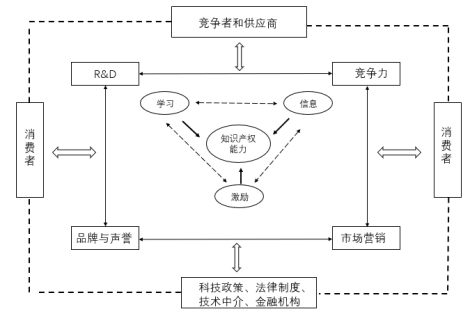
Figure 1. Collaborative use of intellectual property
(2) Strengthening research and development
Enterprises should implement appropriate measures to further advance domestic and international patent applications. While some Chinese companies have demonstrated strong performance in intellectual property creation and utilization, analysis of current realities reveals that many still face challenges in intellectual property awareness. To address this, businesses should increase R&D investment, prioritize awareness campaigns about intellectual property importance, and comprehensively enhance employees understanding of intellectual property trade. This will motivate staff to actively pursue domestic and international patent applications with greater initiative and enthusiasm.
(3) Enhancing awareness of intellectual property rights
In international trade, intellectual property infringement incidents occur frequently. Analysis of current realities reveals that many enterprises lack sufficient awareness of rights protection, still suffering from passive defense issues. During intellectual property transactions, companies often struggle to identify appropriate legal instruments or effectively leverage these tools to precisely counter competitors. When foreign enterprises sue domestic companies, many Chinese firms fail to utilize legal mechanisms the Anti-Unfair Competition Law of the Peoples Republic of China and patent invalidation procedures to reverse their passive positions. To address this effectively, enterprises should comprehensively enhance intellectual property rights awareness, master strategies to protect legitimate interests through IP tactics, and proactively engage in litigation when disputes arise. Additionally, companies should establish scientific IP early warning systems to prevent redundant research and ensure systematic rights protection. Through patent early warning mechanisms, corporate supervisors can promptly alert decision-makers about anomalies, enabling swift identification of potential major patent disputes and their severity. This allows timely implementation of effective countermeasures, significantly strengthening enterprises capabilities in preventing and resolving significant patent disputes.
(IV) Seek national and policy support
As is widely recognized, Chinas economy has achieved remarkable growth since the implementation of its reform and opening-up strategy, establishing itself as a major export powerhouse. However, it must be acknowledged that the majority of exported products remain low-to-mid-tech goods. While Chinas international trade achievements are widely recognized, enterprises still face significant constraints in global market participation, primarily stemming from resource supply-demand imbalances, extensive development models, and insufficient competitiveness. These multifaceted challenges not only limit corporate growth but also constrain Chinas overall international trade, leading to imbalances in imports and exports. To address this, enterprises must intensify efforts to adjust their operational strategies, formulate scientific development plans, and ensure effective implementation. On one hand, they should accelerate structural reforms by strategically increasing R&D investments under government guidance, securing funding from authorities, and advancing emerging high-tech sectors IoT and new energy vehicles. These industries require meticulous long-term planning to contribute to Chinas global economic integration. On the other hand, proactive promotion of intellectual property pilot programs and demonstration projects is essential. In recent years, China has continuously improved its intellectual property trade legal framework. Amid this macroeconomic landscape, enterprises must strengthen their awareness of intellectual property protection and invest more resources in safeguarding their intellectual assets. Through ongoing exploration and practical implementation, companies should enhance their innovation capabilities while actively responding to national initiatives. By deeply engaging in intellectual property pilot programs and demonstration projects, they can leverage accumulated best practices to provide valuable references and insights for other related enterprises.
IV. CONCLUSION
In Chinas international trade, the adverse effects of intellectual property trade barriers cannot be ignored, necessitating effective countermeasures. Enterprises should allocate more resources to R&D, accelerate product innovation cycles, and maximize value creation. Notably, addressing IP trade barriers requires not only corporate attention but also heightened national focus. Government agencies must intensify efforts to cultivate top-tier IP professionals, leveraging talent to drive technological innovation and ensure sustained competitive advantages in global trade. Furthermore, establishing robust legal frameworks and aligning with international IP protection standards will provide stronger safeguards for businesses. Simultaneously, accelerating industrial restructuring will maximize its role in enterprise transformation, while cost-efficient management will enhance export competitiveness of domestic products in international markets.
References
[1] Wang Hua, Jin Minghao. Research on Enhancing Corporate Intellectual Property Capabilities to Address International Trade Barriers: A Case Study Approach [J]. Productivity Research, 2023(10):118-125.
[2] Li Dajiang. Analysis of Characteristics, Forms, and Impacts of Intellectual Property Barriers [J]. Science, Technology, and Economic Market, 2014(4):142.
[3] Xu Yuan. The Nature of Intellectual Property Trade Barriers and Its Analysis from the Perspective of International Political Economy [J]. Pacific Journal, 2012,20(2):61-73.
[4] Zhao Yanling. Trade Barriers in Intellectual Property Rights and Countermeasures in International Trade [J]. Journal of Luohe Vocational and Technical College, 2012,11(1):80-82.